Do you wanna hear something crazy?
It’s really fucking wild.
The corners of my lips
Used to turn up like a smile.
But if you saw me now?
I always wear a frown.
It’s not because I’m lazy.
Every single day I try.
But to fake a smile?
Feels like running for a mile.
Author: poetryfest
Submit your Poetry to the Festival. Three Options:
1) To post.
2) To have performed by an actor
3) To be made into a film.
BODY IMAGE Poem: I am what i am not, by Elizabeth Agre
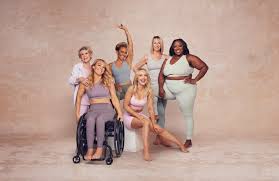
i am not tall or thin
i do not have blonde hair
i am not intelligent
i am not a good cook
or have a green thumb
i can not sing
i do not read or watch TV
i have wrinkly skin and graying hair
i carry an extra 20 lbs.
i have a smile that is not mine
i do not wear tight clothes
or have cute shoes
I drop things
I walk funny
I am what I am not
I am not what you want anymore
LAAM
BODY IMAGE Poem: Inside Out, by Kimberly Wilder
One local seated between two visitors
she is curvy, they are thin.
The one on the left asks the one on the right,
do you do yoga?
Leaving the one in the middle feeling invisible,
outraged because the answer is yes,
but she’s not asked.
Her favorite studio is deemed untraditional.
The other visitor’s suggestion is taken
because she is traditional.
Neither visitor is aware of the harm, but
she reminds herself that she is beautiful.
Inside
and out.
BODY IMAGE Poem: My Body Isn’t a Protest, by Nickie DeSardo
My body isn’t a protest.
It’s a betrayal.
I’ve been trapped in here for years,
buried inside a harp seal,
wide-eyed with hakapiks overhead.
It was silent when I wanted to scream.
It froze when I wanted to fight.
It stayed when I should have fled.
My body isn’t a protest.
It’s a betrayal.
It’s a betrayal.
Even my body knows it,
marks its own cells as intruders,
attacks itself,
as if the outside world wasn’t enough,
it joins the conquest,
and forms an internal massacre.
Hand me the club.
I’ll do it myself.
BODY IMAGE Poem: Cat, by Zoe Bonners-Randall
Sometimes, I wish I was a cat
People don’t treat cats the way they treat people
Cats don’t have any responsibilities
They’re free to be whatever they want
And to do whatever they want
But then I realize
People judge you no matter what
Sure, some people love a chunky cat
But just as many people scream animal abuse
Nowhere is safe
BODY IMAGE Poem: Fruit of the Womb, by Caroline Hanna
At Four Weeks Your Baby is the Size of a Poppy Seed
It’s making me opioidic.
Scratching my skin dry
Craving, nesting, gathering.
Put me to sleep
In a field of petals.
A deadly red flower
Blooms from a deflowering.
At Five Weeks Your Baby is the Size of a Sesame Seed
On top of a hamburger bun.
A bun in the oven.
The dough rises.
I have grown another nervous system.
An extra set of nerves.
Double the anxiety,
And I can’t figure out why.
At Six Weeks Your Baby is the Size of Sweet Pea
Oh sweet pea, you darling.
I don’t want to eat your
Liver, or lungs, or heart.
I have seemed to misplace mine.
I can hear it beating
Deep and rhythmically
Inside of me.
At Seven Weeks Your Baby is the Size of a Blueberry
Which was the first thing to make me throw up.
Muck up purple sludge
Into the white porcelain toilet.
Harvested in late July.
Bruised in green.
Now starting to bud
And bloom into finger-shaped petals.
At Eight Weeks Your Baby is the Size of a Raspberry
You heart-shaped protector.
Give me some space, some air.
Something is breathing for me.
Taking the “Fresh Air” by Kenneth Koch
“Oh to be seventeen years old / Once again”
“But no, air! you must go… Ah, stay!”
I need you to stay
To put my oxygen mask on first.
At Nine Weeks Your Baby is the Size of a Grape
I cried in my grape-colored room
For days and days.
My eyelids are now just my eyelids,
Wet with tears.
Dried up and dry skin.
Grape to a raisin. Raisin to me.
Just me.
DEATH Poem: A Funeral From the Dead, by Ren Palmieri

Casket enclosed and pitch-sharp nothingness,
Hearing from every living being’s breath.
The ones close to home and ones far away,
All coming as my bright light faded away.
Sad music that played, and tears that mourn,
Had none of them arguing, any more.
Instead of yelling and screams, some of which last,
There is only mourning with all men in black.
Sensing the presence of a loved one nearby,
Vibrations of sound softer than a butterfly,
A speech was made through awful whines,
And memories went back in time.
Delusions were lived and bodies revived,
More speeches also arrived.
And when the music stopped, the tears slowly faded,
My casket remained closed, and I was unaided.
DEATH Poem: To live for them, by Tamara Fakhoury
I am the lucky one. The streets here
don’t crack beneath the sky doesn’t
burn with fire, and I walk unscarred
while they stay, buried in the dust of
a land that won’t let them go. I live
for them. For the children who play
with shattered glass, for the mothers
whose eyes are too tired to cry. I live
for the lives they can’t have, the life
stolen from them with every breath
they take.
They ask if I’m safe. I say
yes, but the word feels
hollow, like something
stolen from their mouths.
How can I be safe, when
they are still there,
holding onto hope
beneath skies that never
forget what it means to
suffer?
I take their names with me
a prayer on my lips.
I carry their lives, their
dreams, their breath,
across the distance. And
I will live for all of us,
even when I don’t know
how to carry this weight.
I call my mother, her voice trembling
on the line. She tells me I should be
careful, that I shouldn’t talk about it
too much, that it’s not my fight, not
with my passport, not with my
privilege. “Don’t make waves,” she
says,
“Don’t risk what you have.”
But how do I stay quiet,
when the blood of the land
is my own?
How do I stay silent, when
I think of the families just
like mine, just like us, torn
apart by borders, by
bombs, by history’s
weight?
How can I be safe, when their
faces fill my thoughts, when I
imagine their children playing in
the rubble, instead of in the
fields that I used to play in? How
do I not speak, when all I can
think of is that this could have
been us that it could have been
my family left in the dust of a
forgotten world?
I carry their voices, and
sometimes, I hear my
mother’s too, warning me to
protect myself, but her love
feels small, shrinking in the
shadow of a world that won’t
let go of its grief.
I will carry their weight, I will
carry their stories, even if it
means I can never rest.
Because what is safety when
you live with the fear that you
might be next?
DEATH Poem: The Cursed Mannequin Heads, by Kelton Jones
n the corner of the museum’s foggy hall,
Mannequins stood on display surrounded by caution tape
three mannequin heads peeking down the hall, their faces twisted,
eyes blank yet watchful, frightfully captivating,
Each smile was a grim echo of something forgotten.
Do you see us? they whisper,
The secrets we hold, the stories untold,
those who dared to gaze too long,
now part of our eerie collection.
Once, they flourished on a grand display,
where glamour masked dark ambitions,
but now they linger in the shadows,
a siren’s call to the curious and brave.
One evening, a wanderer approached,
drawn by the heads’ haunting gaze,
What lies beneath those forced smiles?
Their stares daunting, I could feel their souls.
Unfazed, the wanderer reached their hand out. To feel the skin-like material on their faces.
The heads shook. a chilling gasp,
Stay with us, dear friend,
and let us show you our world.
In an instant, the air grew thick,
and the wanderer felt their skin start to crawl,
as the heads twisted into wicked grins,
eyes gleaming with a hunger for souls.
You wanted to see, didn’t you? they sang,
Now you’re one of us, a figure in our play,
lost among the whispers of those before,
a new face in our cursed image.
With a final shiver, the room fell still,
the heads stood silent, now even more alive,
waiting for the next curious soul,
to step closer and join their eerie collection on display.
DEATH Poem: Byzantine, by Vince Soldano
14,000 soldiers
March through the city gate,
even though
25,000
had left over
10 months ago.
The cries of the people,
happy for their safe return
can be heard all over the city.
Generals on horseback and in chariots,
banners and treasures shown in military display.
The king and the bishop
await the parade in the city’s center.
A blessing and thanks are to be given,
to those who made a return home.
Soldiers,
boys in their teens as well as the men,
limping,
bloody and wounded,
trudging through the streets.
relieved to be home.
The horrors they witnessed,
the gore and the bloodshed.
They watched as their
friends, brothers, fathers, uncles
got slaughtered in front of them.
For what reason?
To gain another region
in the name of their
King.
The lives sacrificed,
they hope were not in vain.
Their wartime sorrows
for they left the dead behind.
Gone but definitely not
forgotten.
The images from the battlefield,
engraved in their memories.
The cries of the dying,
both their own countrymen and the enemy.
The sounds resonating in their ears.
What was it all truly for?
Why must their king be so greedy?
Why was the king so willing
to sacrifice the lives of his people?
Why did the young men have to die?
Why did anyone have to die?
The king rejoices in their victory,
not knowing the true price that was paid.
The bishop says it was God
that helped them win,
yet the soldiers say
God had nothing
to do with it.
The generals bask in the glory.
High on top horses, they take
full credit for the
triumph.
The parade ends.
The festivities begin
feasts and parties throughout
the city. Women dancing
in the streets.
Whores fast at work,
the tired men happy for attention.
Bonfires light up
almost every corner.
The sweet sound
of music is heard
all around the city.
The people rejoice,
not knowing
the pain and
the horrors
that occurred.
The king’s banquet,
alive and elaborate,
flaunting
“his”
victory.
He hosts all of
his council and the
top generals,
none of whom know
the lives that were lost.
They only toast to
triumph of the
army.
The people celebrate
for the war is over.
The men are back home
with their families.
Yet, still in their minds
are those who did not
return.
Over 25,000 left,
but only 14,000
made the journey home.
Here’s to the men who lost their lives:
the 11,000 souls.
 POETRY FESTIVAL. Submit to site for FREE. Submit for actor performance. Submit poem to be made into film.